
Forensic accounting trends sets the stage for this enthralling narrative, offering readers a glimpse into a story that is rich in detail and brimming with originality from the outset.
This topic delves into the current landscape of forensic accounting, highlighting the latest advancements in technology, the crucial role of data analytics in fraud detection, and the increasing importance of regulatory changes. As we explore how these factors intertwine with financial services, a comprehensive understanding emerges of how forensic accountants are adapting to meet the challenges of modern financial environments.
Current Trends in Forensic Accounting
The field of forensic accounting is rapidly evolving, influenced by advancements in technology and the increasing complexity of financial crimes. With a heightened focus on risk management and fraud detection, forensic accountants are adopting innovative approaches to enhance their investigative capabilities. This segment explores the current trends shaping forensic accounting, particularly the integration of emerging technologies, the role of data analytics, and the significance of cybersecurity in investigations.
Emerging Technologies in Forensic Accounting
Emerging technologies are transforming forensic accounting by providing tools that streamline investigations and improve accuracy. Technologies such as artificial intelligence (AI), machine learning, and blockchain are at the forefront, enabling forensic accountants to conduct more thorough and efficient analyses.
Artificial Intelligence
AI can analyze vast amounts of data quickly, identifying anomalies and patterns that might suggest fraudulent activity. For instance, AI algorithms can sift through transaction data to flag unusual spending behaviors or discrepancies.
Machine Learning
This subset of AI improves over time, learning from previous cases to enhance predictive analytics. For example, machine learning can be applied to historical fraud cases, allowing forensic accountants to predict where future fraud may occur based on past trends.
Blockchain Technology
With its inherent transparency and security features, blockchain is proving to be a valuable asset in forensic accounting. It provides an immutable ledger that can help trace transactions and verify the integrity of data. The use of blockchain can significantly reduce the risk of tampering with financial records.
“Emerging technologies like AI and blockchain are not just trends; they are redefining how forensic accounting is practiced.”
Importance of Data Analytics in Fraud Detection
Data analytics has become an indispensable tool in forensic accounting, significantly enhancing the ability to detect and prevent fraud. The integration of data analytics allows accountants to process and analyze large datasets efficiently, providing insights that are crucial in identifying suspicious activities.Forensic accountants now routinely employ various analytical techniques, including:
Descriptive Analytics
This technique helps in summarizing past data to identify trends and patterns, which can highlight potential fraud risks.
Diagnostic Analytics
By examining data to understand the causes of specific issues, accountants can dive deeper into anomalies that may suggest fraudulent activity.
Predictive Analytics
Utilizing historical data, predictive analytics can forecast future risks, allowing organizations to implement proactive measures against potential fraud.The implementation of these analytics not only aids in fraud detection but also supports compliance efforts and enhances risk management frameworks, making organizations more resilient to financial crimes.
“The power of data analytics lies in its ability to reveal hidden patterns and trends that traditional methods may overlook.”
Role of Forensic Accountants in Cybersecurity Breaches
As cyber threats continue to escalate, forensic accountants are increasingly called upon to investigate cybersecurity breaches. Their expertise is critical in assessing the financial implications of a breach, understanding how it occurred, and preventing future incidents.Forensic accountants play a multifaceted role in cybersecurity, including:
Incident Response
They assist organizations in responding to data breaches by conducting investigations to determine the extent of the damage and how it occurred.
Financial Assessment
Forensic accountants evaluate the financial impact of breaches, including lost revenue, regulatory fines, and costs associated with remediation efforts.
Risk Mitigation
By analyzing breaches, forensic accountants help organizations develop better cybersecurity strategies and controls to protect sensitive data in the future.The combination of accounting skills and understanding of IT systems makes forensic accountants a vital asset in combating cyber threats and protecting organizations from financial losses.
“In today’s digital age, forensic accountants are not just number crunchers; they are key players in safeguarding organizations against cyber threats.”
Regulatory Changes Affecting Forensic Accounting
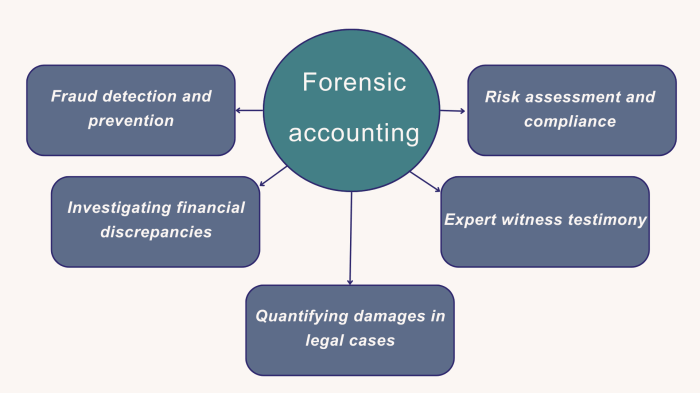
The landscape of forensic accounting is continually evolving, influenced significantly by new laws and regulations. These changes not only impact the methodologies employed by forensic accountants but also enhance their role in ensuring adherence to compliance standards. With an increasing emphasis on transparency and accountability, it’s essential for forensic accountants to stay updated and adapt their practices accordingly.The implications of new laws and regulations on forensic accounting practices are far-reaching.
Regulatory bodies worldwide are tightening compliance frameworks, which necessitates a change in how forensic accountants approach their work. Understanding these regulations is crucial for forensic accountants as it directly informs the strategies they adopt in fraud detection and investigation.
Impact of Compliance Standards on Fraud Examination Procedures
Adherence to evolving compliance standards is critical for forensic accountants, shaping the procedures they follow in fraud examinations. These standards serve as the foundation upon which investigations are conducted, guiding accountants in their quest for evidence and ensuring that their findings hold up in a legal context. Key points about the influence of compliance changes include:
- Increased emphasis on corporate governance requirements mandates thorough documentation and justification of financial activities, which forensic accountants must meticulously oversee.
- The introduction of stricter anti-money laundering (AML) regulations has expanded the scope of forensic investigations, requiring accountants to adopt more sophisticated data analysis techniques to detect illicit activities.
- With the implementation of the Sarbanes-Oxley Act (SOX), there is a heightened focus on internal controls and reporting, compelling forensic accountants to engage more deeply with organizations’ financial systems.
Forensic accountants play a vital role in maintaining regulatory compliance, acting as gatekeepers of financial integrity. Their involvement typically encompasses a variety of responsibilities, including:
- Conducting risk assessments to identify potential compliance gaps and areas of vulnerability within an organization.
- Collaborating with legal and compliance teams to ensure that all financial reporting meets statutory requirements, thereby mitigating the risk of penalties.
- Providing training and resources to organizations so employees are aware of the regulatory landscape and their responsibilities for compliance.
The evolving regulatory environment requires forensic accountants to be agile, adapting their skills and methodologies to comply with new standards while effectively combating fraud. As regulations become more complex, staying ahead of the curve is not just beneficial but essential for the integrity and reliability of financial reporting.
Forensic Accounting in Financial Services
Forensic accounting has gained immense significance in the financial services sector, particularly as financial institutions face increasing scrutiny and the evolving landscape of fraud. The integration of forensic accounting practices within these institutions not only aids in risk management but also enhances overall financial integrity. By identifying and mitigating risks associated with financial fraud, forensic accountants play a crucial role in safeguarding assets and ensuring compliance with regulatory standards.
Importance of Forensic Accounting in Risk Management
Forensic accounting is integral to risk management in financial institutions. It involves analyzing financial data to detect irregularities that may indicate fraudulent activity. The importance of forensic accounting in this context can be highlighted by the following factors:
-
Fraud Prevention:
Forensic accountants identify vulnerabilities in financial systems, helping organizations to implement controls that prevent fraudulent activities.
-
Damage Control:
In the event of fraud, forensic accountants conduct investigations to assess the extent of financial loss and recommend measures to limit damages.
-
Regulatory Compliance:
With stringent regulations in place, forensic accountants ensure that financial institutions adhere to laws, thereby minimizing legal risks.
-
Enhanced Decision Making:
By providing accurate financial insights, forensic accountants empower management to make informed decisions regarding risk strategies.
Methods Used in Forensic Accounting for Financial Fraud Detection
Various methods employed in forensic accounting are essential for detecting financial fraud. These techniques are systematically applied to uncover discrepancies in financial statements and transactions. Here are some notable methods:
-
Data Analysis:
Forensic accountants analyze large volumes of financial data to identify patterns and anomalies that may indicate fraud.
-
Interviews and Interrogations:
Engaging with employees and stakeholders through interviews can help uncover inconsistencies and motivations behind fraudulent actions.
-
Document Examination:
Thoroughly reviewing financial documents, such as invoices and contracts, assists in detecting alterations or fraudulent entries.
-
Computer Forensics:
Utilizing technology to recover and analyze data from computers and electronic devices plays a critical role in uncovering hidden evidence of fraud.
Integration of Forensic Accounting into Financial Planning and Investment Strategies
Forensic accounting’s integration into financial planning and investment strategies is vital for establishing sound financial practices. This incorporation enhances the credibility of financial forecasts and investment decisions. Key aspects include:
-
Risk Assessment:
Forensic accountants assess potential risks associated with investments, helping organizations to allocate resources more effectively.
-
Due Diligence:
In mergers and acquisitions, forensic accounting ensures thorough examinations of financial statements, thereby mitigating the risk of investing in fraudulent entities.
-
Performance Monitoring:
Regular forensic reviews of financial performance ensure that investments align with expected outcomes, allowing for timely adjustments.
-
Transparency:
Forensic accounting fosters transparency in financial reporting, enhancing investor confidence in the institution’s integrity and reliability.
Closing Notes
In summary, the discussion on forensic accounting trends reveals a dynamic field that is continually evolving to address new challenges and opportunities. From leveraging advanced technologies in investigations to navigating the complexities of regulatory compliance, forensic accountants play a vital role in ensuring financial integrity and security. As we look ahead, embracing these trends will be essential for professionals aiming to enhance their practice and safeguard against fraud.
Expert Answers
What are the emerging technologies in forensic accounting?
Emerging technologies include artificial intelligence, machine learning, and blockchain, which enhance data analysis and fraud detection capabilities.
How does data analytics improve fraud detection?
Data analytics enables forensic accountants to identify patterns and anomalies in financial data that could indicate fraudulent activities.
What role do forensic accountants play in cybersecurity?
Forensic accountants assess the financial implications of cybersecurity breaches and help organizations develop strategies to mitigate risks.
How do regulatory changes impact forensic accounting practices?
Regulatory changes require forensic accountants to adapt their methodologies to comply with new laws and standards, ensuring accurate and effective fraud examinations.
Why is forensic accounting important in financial institutions?
Forensic accounting is crucial for identifying and managing risks associated with financial fraud, thereby safeguarding the institution’s integrity and reputation.


