
Managing student loans is a crucial skill for anyone embarking on their educational journey. As tuition costs skyrocket, understanding how to handle these financial obligations can mean the difference between a stable future and a mountain of debt. This guide delves into the various types of student loans available, effective tracking methods for payments, and essential financial planning strategies that can empower borrowers to take control of their financial destiny.
From budgeting techniques to understanding the impact of credit scores, the insights shared here aim to equip readers with the knowledge needed to navigate the complexities of student loans successfully. By developing a solid repayment plan and utilizing available tools, students can transform their loan experience from a source of stress to a manageable aspect of their financial lives.
Managing Student Loans Overview
Effectively managing student loans is crucial for financial well-being and long-term economic stability. With the rising costs of education, many students find themselves in significant debt upon graduation. Understanding how to navigate this landscape can help borrowers avoid pitfalls and make informed decisions about repayment strategies.There are various types of student loans available, and each comes with its own terms and conditions.
The most common categories include federal loans, private loans, and state loans. Federal student loans are often preferred due to their favorable terms, such as lower interest rates and flexible repayment options. On the other hand, private loans typically come from banks or credit unions and may require a credit check, which can influence the interest rate and terms of the loan.
Additionally, some states offer their own loan programs which can have unique benefits or requirements.
Types of Student Loans
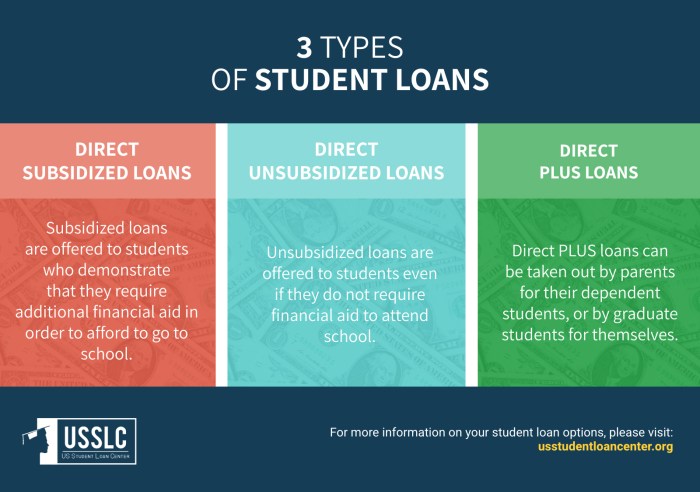
Understanding the different types of student loans is essential for making informed borrowing decisions. Here’s a detailed overview of the various loan types:
- Federal Direct Loans: These loans are funded by the federal government and include subsidized and unsubsidized options. Subsidized loans do not accrue interest while the borrower is in school, while unsubsidized loans do.
- Federal Perkins Loans: Aimed at students with exceptional financial need, these loans have a fixed interest rate and are issued by schools, but the program has ended for new borrowers since 2017.
- Private Student Loans: Offered by private lenders, these loans can vary widely in terms, interest rates, and repayment options. They typically require a credit check.
- State Loans: Some states provide loan programs with benefits such as lower interest rates or loan forgiveness for those who work in public service sectors.
Tracking and organizing loan payments is vital for staying on top of repayments and avoiding defaults. Keeping diligent records not only helps in managing payments but also assists in planning for future financial goals.
Methods for Tracking and Organizing Loan Payments
Effective methods for managing loan payments can significantly alleviate financial stress. Here are some key practices to consider:
- Create a Payment Schedule: Develop a timeline of when payments are due, incorporating reminders to ensure timely payments.
- Use Financial Apps: Numerous apps can help track loans, set budgets, and remind users of upcoming payments. These tools can automate the organization of loan details.
- Maintain a Payment Log: Keep a detailed record of all payments made, including dates and amounts. This log can be vital for personal records and in case of any discrepancies.
- Consolidate Loans: For those with multiple loans, consolidating can simplify payment tracking and may lead to lower interest rates.
“Managing your student loans effectively is not just about paying them off; it’s about creating a sustainable financial future.”
By understanding the types of loans available and employing effective tracking methods, borrowers can better manage their student loans and make informed decisions that impact their financial health in the long term.
Financial Planning for Student Loans
Managing student loans effectively requires a thoughtful approach to financial planning. Budgeting plays a crucial role in this process, allowing borrowers to allocate their income efficiently while making timely payments on their loans. By understanding how to create a detailed repayment plan and utilizing various tools, students and graduates can navigate their loan obligations with greater ease and confidence.
Importance of Budgeting in Managing Student Loan Debt
Budgeting is the cornerstone of financial planning, especially when it comes to handling student loan debt. A well-structured budget helps individuals ensure that they can meet their monthly loan payments while also covering essential living expenses. Here are key steps to create an effective budget for managing student loans:
- Track Income: Begin by documenting all sources of income, including salary, side gigs, and any financial aid or assistance.
- List Expenses: Categorize all monthly expenses, including rent, utilities, groceries, and transportation, along with your student loan payments.
- Allocate Funds: Designate a portion of your income specifically for loan repayment, ensuring it aligns with your financial goals.
- Adjust Regularly: Periodically review your budget to account for changes in income or living expenses, making necessary adjustments to your repayment plan.
Detailed Plan for Repaying Loans Based on Income Levels
Creating a tailored repayment plan based on your income level is essential for staying on track with your student loans. The key is to align your repayment strategy with your financial situation. Here’s a breakdown of how to approach this:
1. Income Assessment
Calculate your monthly net income after taxes and other deductions.
2. Determine Loan Payments
Identify your total monthly student loan payment obligations, including both principal and interest.
3. Choose a Repayment Strategy
Based on your income, select an appropriate repayment plan, such as:
Standard Repayment Plan
Fixed payments over 10 years; ideal for those with a stable income.
Income-Driven Repayment Plans
Payments based on income, suitable for those with lower earnings who may struggle with the standard plan.
Graduated Repayment Plan
Payments start lower and increase every two years, good for individuals expecting salary growth.
4. Emergency Fund Consideration
Build an emergency fund to cover unexpected expenses, ensuring your loan payments remain manageable even in times of financial uncertainty.
Tools and Resources for Financial Planning
Utilizing tools and resources can significantly enhance your financial planning efforts for student loans. These resources assist in tracking expenses, planning budgets, and managing loan repayments effectively. Here are some valuable options:
- Budgeting Apps: Applications like Mint or YNAB (You Need A Budget) help track spending and create budgets.
- Loan Calculators: Online calculators can help estimate monthly payments, interest costs, and repayment timelines based on your loan amount and interest rate.
- Financial Counselors: Consider consulting with a financial advisor or counselor who specializes in student loans for personalized guidance.
- Government Resources: Websites like StudentAid.gov provide a wealth of information on repayment options, forgiveness programs, and managing student loans.
“Budgeting effectively allows you to allocate funds towards your student loans while still enjoying life in the present.”
Impact of Credit and Collections on Student Loans
Managing student loans effectively is crucial not just for financial well-being, but also for maintaining a healthy credit score. Understanding the implications of student loans on credit scores, potential consequences of defaulting, and strategies to manage collections is essential for any borrower navigating this landscape.Student loans play a significant role in shaping an individual’s credit score and overall financial health.
These loans are considered installment accounts and contribute to your credit mix, which can positively impact your score when managed responsibly. However, if payments are missed or loans go into default, the repercussions can be severe, damaging credit scores and limiting future financial opportunities.
Consequences of Defaulting on Student Loans
The fallout from defaulting on student loans is serious and far-reaching. When a borrower defaults, it can significantly lower their credit score, making it difficult to secure future loans, credit cards, or even housing.Key consequences include:
-
Immediate impact on credit score:
Defaulting can cause a drop of 100 points or more in a credit score, which can take years to recover from.
-
Collection activities:
Loans in default may be sent to collections, leading to aggressive collection efforts and potential lawsuits.
-
Loss of federal benefits:
Borrowers may lose eligibility for deferment, forbearance, and income-driven repayment plans, limiting options for managing debt.
-
Wage garnishment:
The government can garnish wages or tax refunds to recover defaulted loan amounts, which affects take-home income.
Strategies for Managing Collections on Overdue Loans
Managing overdue student loans requires a strategic approach to avoid default and mitigate collection efforts. Here are several effective strategies borrowers can consider:
-
Engage with your loan servicer:
Communicating openly with your servicer can lead to potential solutions, such as revised payment plans or deferment options.
-
Explore rehabilitation programs:
Some federal loans offer rehabilitation programs that can restore your credit status after a default period.
-
Consider consolidation:
Consolidating multiple loans can simplify payments and possibly lower monthly payments, making it more manageable to stay current.
-
Set up automatic payments:
Automating payments can reduce the likelihood of missed payments and often results in interest rate reductions.
By staying informed and proactive, borrowers can effectively manage their student loans, safeguard their credit scores, and maintain their overall financial health.
Outcome Summary
In summary, mastering the art of managing student loans is an invaluable endeavor that not only helps in maintaining financial health but also paves the way for future opportunities. By understanding the types of loans, employing effective budgeting strategies, and staying informed about the implications of credit and collections, borrowers can ensure they are well-prepared to tackle their obligations head-on.
A proactive approach to managing student loans ultimately leads to peace of mind and financial freedom.
Quick FAQs
What types of student loans are available?
There are federal loans, private loans, subsidized and unsubsidized loans, among others.
How can I create a budget for repaying my student loans?
Start by tracking your income and expenses, then allocate a portion of your budget toward loan payments.
What happens if I default on my student loans?
Defaulting can lead to damaged credit scores, wage garnishment, and loss of eligibility for future financial aid.
Are there resources to help manage student loan debt?
Yes, many websites and financial advisors provide tools and guidance for managing and repaying student loans.
How can I improve my credit score while managing student loans?
Making on-time payments and reducing overall debt can significantly boost your credit score.


